
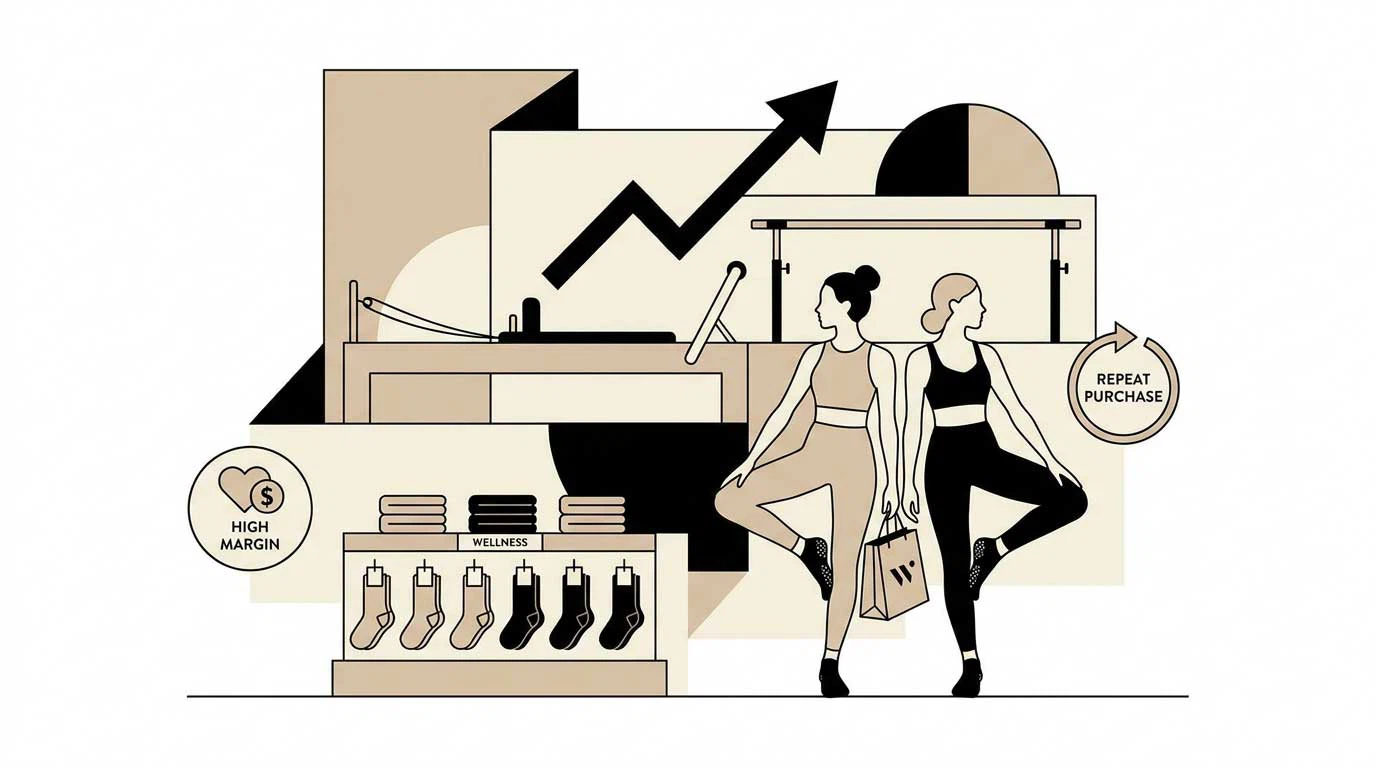
The global activewear landscape is undergoing a massive shift. The era of grip socks being treated as a niche wellness accessory or a generic yoga utility is officially over. Driven by the explosive global expansion of boutique fitness ecosystems (such as Pilates, Lagree, and Barre) and the mainstreaming of a recovery-focused wellness lifestyle, grip socks have evolved into a cultural and retail phenomenon.
Today, founders and sourcing directors look at grip socks through a completely different lens. They are no longer just functional products-they are high-margin SKUs, high-repeat impulse buys, and powerful brand merchandise.
Beyond the studio floor, demand is rapidly expanding into specialized verticals: high-performance football (soccer) training, medical and elderly non-slip care, trampoline parks, and premium at-home loungewear. As a result, the global demand for high-tier OEM & Private Label manufacturing is skyrocketing.
But in a hyper-competitive market, your brand's longevity doesn't depend on marketing alone-it depends on the sophistication of your supply chain. Here is the definitive roadmap to selecting a grip sock manufacturing partner that can power your brand's growth.
Define Your Market Position Before Contacting Manufacturers
A generic, one-size-fits-all sock no longer cuts it. The very first step in choosing a manufacturer is ensuring their production capabilities align with your specific market segmentation. Different market structures dictate entirely different product architectures:
- Premium Pilates & Barre Studios: Require a delicate balance of minimalist aesthetics, plush underfoot comfort, and high grip durability that survives repetitive wash cycles.
- Athletic & Football Performance: Demand intense compression zones, targeted moisture management, and zero-slip interior-exterior locking mechanisms to prevent blisters during high-speed lateral movements.
- Medical & Patient Care: Require strict anti-slip safety compliance, non-constricting welts for circulation, and hygienic, hypoallergenic materials.
- Kids & Trampoline Parks: Demand extreme durability, cost-efficient scaling, and highly washable, non-toxic grips.
The New Paradigm: Social-Driven Product Development
In today's market, a sock must perform brilliantly on the studio floor, but it must perform equally well on Instagram and TikTok. Modern brands prioritize visual appeal, micro-color trends (matching Pantone seasonals), high-visibility logo placement, and unboxing-ready retail packaging. Your manufacturer must understand this visual-first development cycle.

Evaluate Advanced Customization & Technical Manufacturing Capabilities
The gap between a standard hosiery mill and a specialized performance grip sock manufacturer lies in their technical customization capabilities. When auditing a factory, look beyond basic knitting and inspect their advanced engineering:
A. Grip Technology
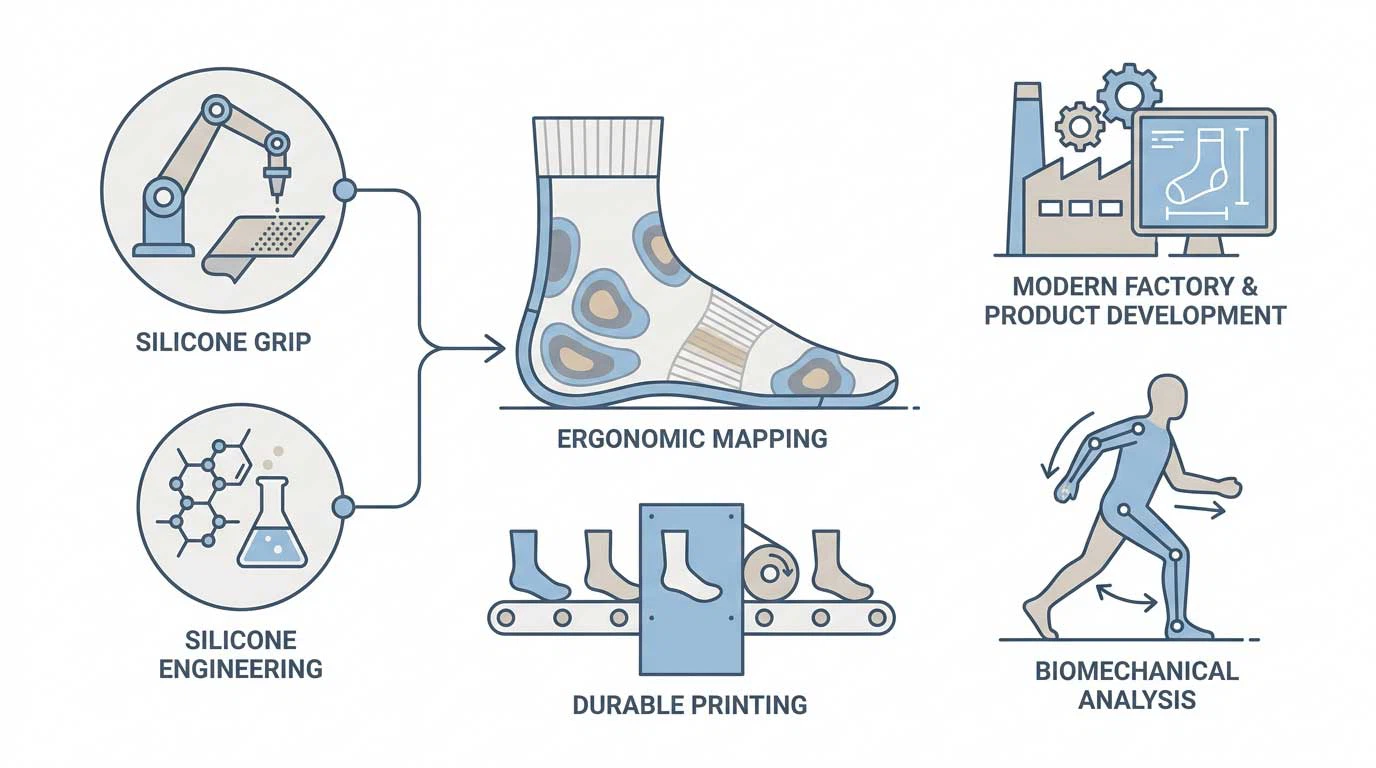
- Silicone vs. PVC: Premium brands have almost entirely migrated to eco-friendly, high-friction silicone. Ensure the factory offers medical-grade or food-grade liquid silicone.
- Ergonomic Grip Mapping: The placement of the grip should not be random. It must match the biomechanics of the foot (e.g., pressure points during a Pilates plank or a football pivot).
- Anti-Crack & Multi-Color Printing: Ask if their silicone printing process resists cracking when stretched and if they can execute multi-color silicone applications seamlessly.
Brand Identity Integration
Your branding should feel integrated, not stamped on. Evaluate their capabilities in:
- High-definition jacquard logos woven directly into the fabric.
- Precision embroidery and premium woven labels.
- Retail-ready packaging (custom header cards, belly bands, and branded eco-pouches).
Sustainable Customization
Modern consumers-especially in North America and Europe-demand sustainability. Top-tier manufacturers must offer options for recycled yarns (like Econyl or recycled polyester), Organic Cotton (GOTS), FSC-certified paper packaging, and biodegradable polybags.
Test Product Performance - Not Just Appearance
A sample might look beautiful out of the box, but how does it perform after 30 industrial washes? Premium grip socks are no longer basic apparel; they are wearable sports engineering. When evaluating factory samples, your product development team must run rigorous checks across two core disciplines:
Performance Testing
- Wash Resistance: Verify if the silicone peels, fades, or loses its high-friction tackiness after multiple standard laundering cycles.
- Grip Durability: Ensure the non-slip coating can withstand intense, repetitive friction without shearing off the fabric base.
- Stretch Recovery: Test the cuff and body elasticity to ensure the sock retains its original shape and compression, rather than sagging after multiple wears.
- Anti-Twisting Structure: Evaluate the technical knit patterns to guarantee the sole of the sock remains firmly aligned under the foot during lateral movements.
Comfort Engineering
- Seamless Toe Closure: Look for hand-linked or ultra-flat toe seams that eliminate friction, preventing chafing and irritation during high-intensity workouts.
- Arch Compression: Check for targeted elastic bands engineered around the midfoot to prevent the sock from sliding, twisting, or bunching.
- Terry Cushioning: Assess the strategic zoning of thickened loops under the heel and the ball of the foot for optimal impact absorption and joint protection.
- Moisture Wicking: Ensure the use of premium combed cotton or advanced technical synthetic blends that efficiently pull sweat away to keep feet dry and blister-free.

Understand MOQ, Scalability & Cost Structure
A manufacturing partnership should be built to scale with your business lifecycle. If a factory only wants to run 10,000 pairs per SKU, they aren't built for a agile DTC brand. Look for a partner that offers:
- Startup-Friendly MOQs: Reasonable minimums per color/size to allow you to test market demand without heavy inventory risk.
- Scalable Production: The infrastructure to smoothly transition from a 1,000-pair test batch to a 50,000-pair holiday rush.
- Fast Replenishment: Agile manufacturing lines that can restock your best-sellers in weeks, not months, preventing stockouts.
- Seasonal Collection Support: The agility to launch capsule drops and limited-edition colorways efficiently.
Beware of Hidden Costs: A cheap per-pair quote can be deceptive. Always clarify upfront costs regarding silicone mold fees, packaging setup charges, custom Pantone color-matching minimums, and the cost of sampling revisions.
Verify Certifications, Compliance & Sustainability Standards
As global supply chain regulations tighten, compliance is non-negotiable. If you plan to sell in the US, EU, or UK, your factory must possess international compliance credentials.
Global Standard Certifications
- OEKO-TEX® Standard 100: Guarantees the finished sock is completely free from harmful chemicals and safe for skin contact.
- GRS (Global Recycled Standard): Verifies the authentic recycled content of your eco-friendly yarn lines.
- GOTS (Global Organic Textile Standard): The gold standard for organic fiber verification.
- REACH Compliance: Crucial for entering the European market without chemical regulatory hurdles.
ESG & Ethical Manufacturing
Modern brand equity is fragile. Consumers will boycott brands with opaque supply chains. Ensure your manufacturing partner undergoes third-party ethical audits (such as BSCI, SMETA/Sedex) that guarantee fair labor practices, safe working conditions, and traceable environmental footprints.
Assess Communication Efficiency & Supply Chain Reliability
Excellent manufacturing is ultimately built on excellent communication. A great factory doesn't just sit back and take orders; they provide active Professional Development Support.
Because many modern activewear founders are marketers rather than textile engineers, an elite factory fills that technical gap. They should proactively suggest alternative materials to save costs, optimize logo execution for cleaner results, recommend upcoming color trends, and refine the sock's ergonomic fit.
Traditional Factory: Takes Order ──> Produces Exact File ──> Ships
Modern Partner: Collaborates ──> Optimizes Design ──> Engineers Product ──> Scales Brand

Finally, assess their Logistics & Lead Time Stability. Do they offer flexible shipping terms (FOB, DDP)? Do they have a proven track record of navigating global shipping bottlenecks? A truly reliable partner manages peak-season capacity effortlessly, ensuring your Q4 holiday inventory arrives on time, every time.
Conclusion: Shifting from a Supplier to a Growth Partner
In a crowded, fast-moving activewear market, the old playbook of "chasing the lowest price per unit" is a race to the bottom. Inferior grip tech, late shipments, and poor wash durability will kill a brand's reputation faster than any marketing campaign can save it.
The right grip sock manufacturer should not be a passive, distant supplier. They must be your manufacturing partner, your product development advisor, and your brand growth supporter.
By choosing a partner that prioritizes technical performance, ethical compliance, design agility, and supply chain stability, you aren't just ordering inventory-you are securing the foundational engine of your brand's long-term value and commercial success.