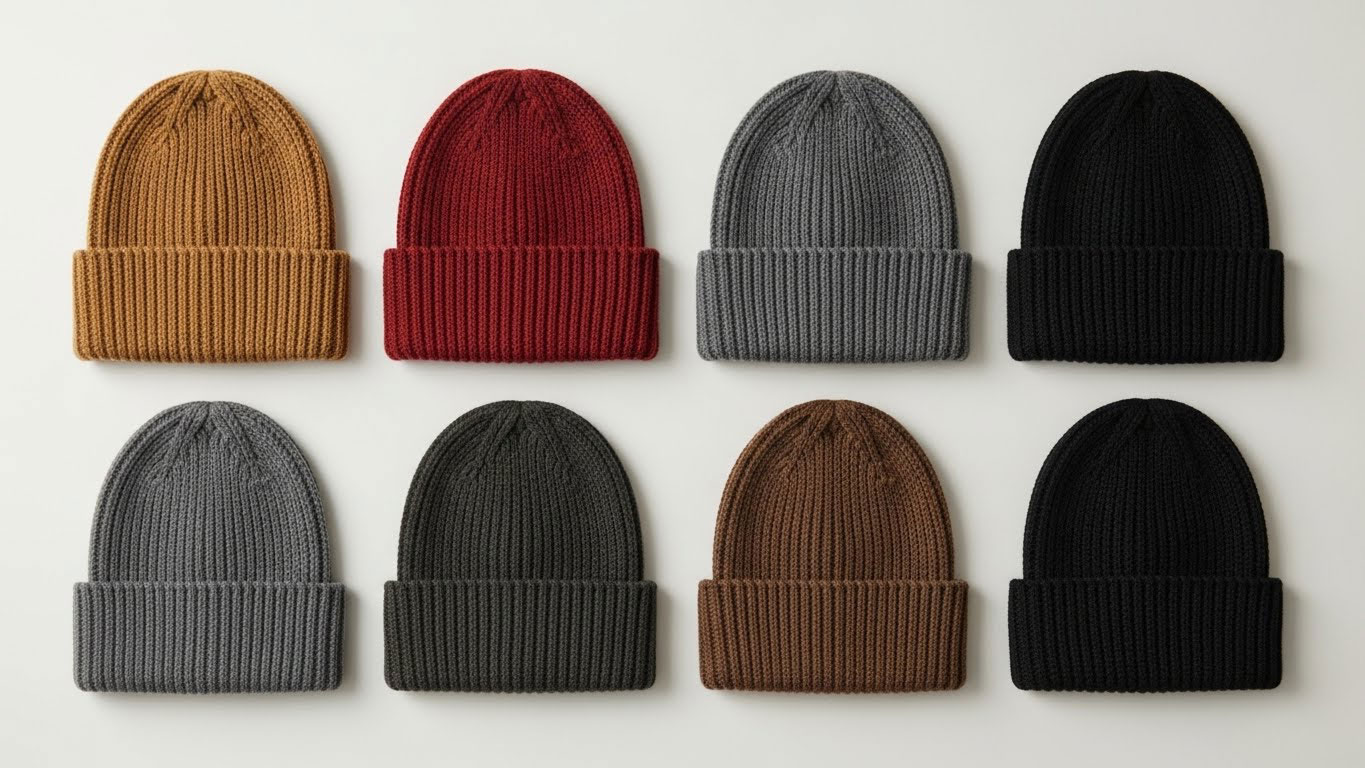
Material selection is one of the most critical decisions when developing a hat product line. The fabric you choose directly affects comfort, durability, shape retention, breathability, decoration performance, and how customers perceive your brand's overall quality.
Whether you are a fashion brand, promotional company, custom headwear manufacturer, or private-label seller, hat materials influence not only product performance and pricing strategy, but also long-term customer satisfaction and repeat orders.
Understanding material characteristics is therefore a foundational step in building a successful and sustainable headwear collection.

Understanding the Main Hat Materials
Before deciding which material best fits your brand, it is essential to understand the most commonly used fabrics in modern headwear manufacturing. Each material offers distinct advantages, limitations, and suitable application scenarios.
The five most widely used hat materials include cotton, polyester, nylon, mesh (typically polyester mesh), and wool. Each serves different brand positions, usage environments, and customer expectations.
Cotton: The Natural, Comfortable Classic
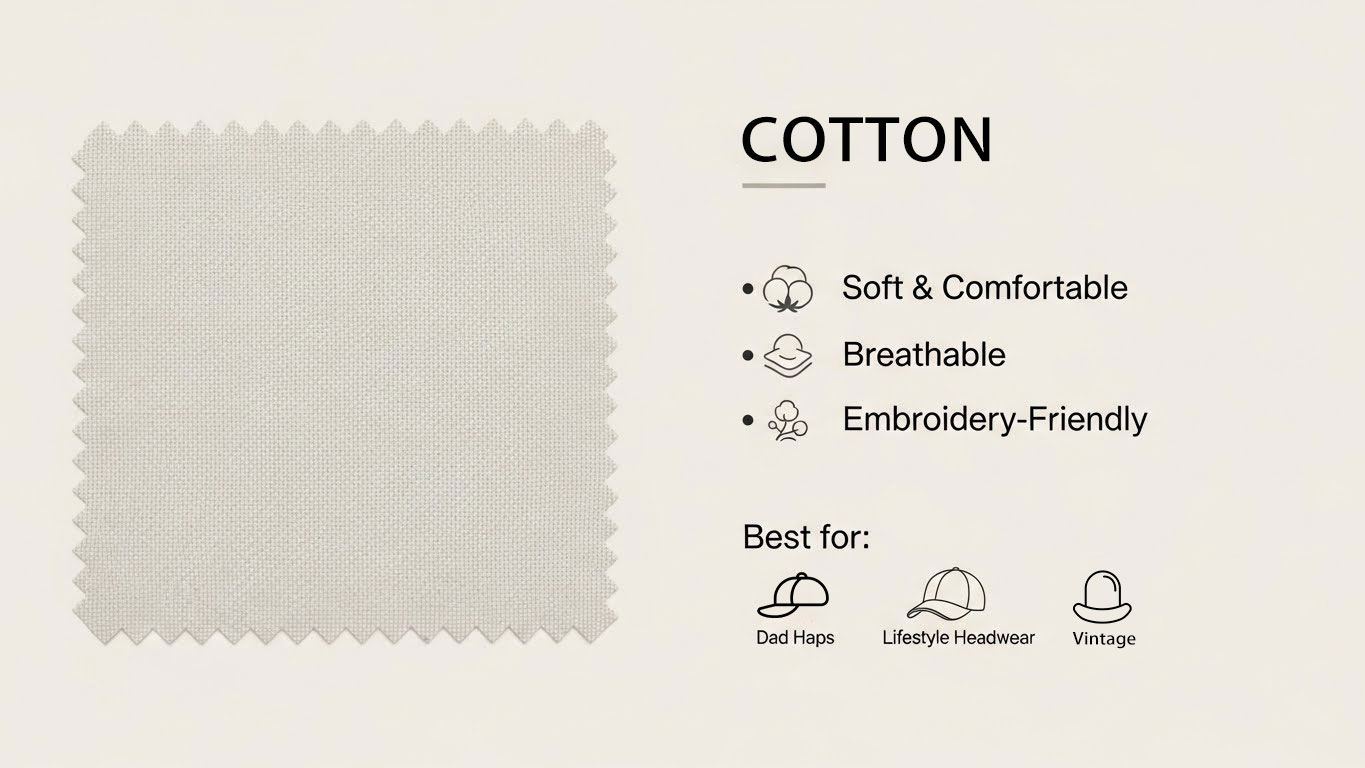
Cotton is one of the most commonly used materials for lifestyle and premium casual hats. Known for its soft hand feel and natural breathability, cotton conveys comfort and a sense of quality that many consumers associate with everyday wear.
Brands aiming for a relaxed, vintage, or lifestyle aesthetic often choose cotton twill or washed cotton for dad hats, casual caps, and premium merchandise collections.
Advantages
- Natural fiber with soft, comfortable wearability
- Breathable and skin-friendly
- Excellent surface for embroidery
- Widely accepted in lifestyle and casual fashion markets
Limitations
- May shrink if not properly pre-treated
- Color fastness is generally lower than polyester
- Not ideal for high-sweat or performance-driven applications
Best for
- Lifestyle brands, dad hats, vintage-style caps, and premium merchandise programs.
Polyester: The Durable, Versatile Performance Choice
Polyester is widely used in sports caps, performance headwear, and large-scale production due to its durability, shape retention, and color stability. It is especially suitable for structured caps such as baseball caps and trucker hats.
Its ability to maintain form and resist wrinkles makes polyester a reliable choice for brands prioritizing consistency and efficiency.
Advantages
- Strong shape retention and structural stability
- High durability and wrinkle resistance
- Excellent color consistency
- Suitable for heat transfer and sublimation printing
Limitations
- Less breathable than cotton
- Firmer hand feel
- Not typically associated with premium vintage aesthetics
Best for
- Sports brands, promotional hats, outdoor caps, and sublimation-printed headwear.
Nylon: Lightweight and Water-Resistant
Nylon is valued for its lightweight construction and water-resistant properties. It is commonly used in outdoor, functional, and modern-style headwear where quick-drying performance and durability are required.
Its smooth surface and technical appearance align well with contemporary and utility-driven designs.
Advantages
- Lightweight and strong
- Water-resistant and quick-drying
- Suitable for outdoor and functional applications
Limitations
- Less breathable than mesh or cotton
- Limited vintage or natural texture appeal
Best for
- Outdoor brands, functional headwear, modern and technical cap designs.

Mesh: The Breathable Favorite for Trucker Caps
Mesh fabric, most commonly made from polyester, is widely used for ventilation panels in trucker caps and summer headwear. Its open structure allows heat to escape, making it suitable for warm climates and active use.
Mesh is frequently combined with other materials, such as cotton or polyester front panels, to balance comfort, structure, and airflow.
Advantages
- Excellent breathability
- Lightweight and comfortable in hot environments
- Cost-effective for large-volume production
Limitations
- Limited structure when used alone
- Less suitable for premium or formal aesthetics
Best for
- Trucker caps, promotional hats, summer collections, and ventilation-focused designs.
Wool: The Premium Choice for Fashion and Winter Caps
Wool is commonly used in fashion-forward and cold-weather headwear. It provides natural insulation and a refined texture that elevates perceived value. Wool hats are often associated with heritage, craftsmanship, and premium branding.
Blended wool fabrics are frequently used to improve durability and reduce maintenance requirements.
Advantages
- Natural warmth and insulation
- Premium look and texture
- Suitable for structured fashion designs
Limitations
- Higher material cost
- Requires careful care and handling
Best for
- Fashion brands, winter caps, heritage-inspired collections, and premium headwear.

How to Choose the Right Hat Material for Your Brand
There is no single "best" material for all hats. The optimal choice depends on brand positioning, customer expectations, climate, decoration methods, and budget. Below is a structured approach to guide material selection.
Based on Brand Positioning
|
Brand Type |
Recommended Materials |
Key Characteristics |
|
Lifestyle / Fashion |
Cotton, Wool |
Premium feel, refined appearance |
|
Outdoor / Functional |
Polyester, Nylon |
Durable, quick-drying |
|
Streetwear |
Wool, Nylon, Mesh |
Strong visual identity |
|
Promotional / Advertising |
Polyester, Mesh |
Cost-effective, durable |

Based on Climate & Environment
- Hot climates → Mesh, cotton
- Humid environments → Polyester, nylon (quick-drying)
- Cold regions → Wool
- High perspiration activities → Performance polyester
Based on Decoration Method
- Different materials respond differently to decoration techniques.
- Embroidery performs best on cotton, wool, and structured polyester
- Sublimation printing requires polyester-based fabrics
- Heat transfer and patches work well on polyester and nylon
Choosing the right material ensures better decoration results and longer-lasting branding.
Based on Budget
- Budget considerations often influence material selection.
- Polyester and mesh are typically more cost-efficient for large-volume programs
- Cotton offers a balance between cost and perceived quality
- Wool sits at the higher end due to material and processing requirements
Aligning material choice with pricing strategy helps maintain margins while meeting market expectations.
Conclusion: Which Material Should Your Brand Choose?
No single hat material can be considered universally "best." The right choice depends on your brand positioning, intended use, market strategy, and customer needs.
- Cotton suits premium casual and lifestyle collections
- Polyester supports durability and performance
- Nylon fits outdoor and modern functional designs
- Mesh excels in ventilation-focused applications
- Wool elevates fashion and winter headwear
Many successful brands also combine materials, such as cotton front panels with mesh backs, or select different fabrics across seasonal collections.
Understanding material performance is the foundation of building a reliable, competitive, and long-lasting headwear line.